
Winter is hard on rubber tracks. Cold rubber is stiffer and less forgiving. Snow covers the rebar, curbs and frozen debris an operator would normally steer around, and slush packs into the undercarriage and freezes overnight.
A lot of that wear comes down to three things you control: the tread you run, how well the machine gets cleaned and checked, and where it's parked.
Choosing a tread for snow
Most fleets run a general-purpose pattern all year, and from spring to fall that makes sense. Our C-Lug is a good example. It's the pattern most of our customers run, and it rates 5 out of 5 on dirt and gravel. Snow is a different job, though, and it calls for a different tread.
For a machine that will spend the winter clearing lots or working wet, half-frozen sites, we recommend switching to the X-TRAC Q-Lug.
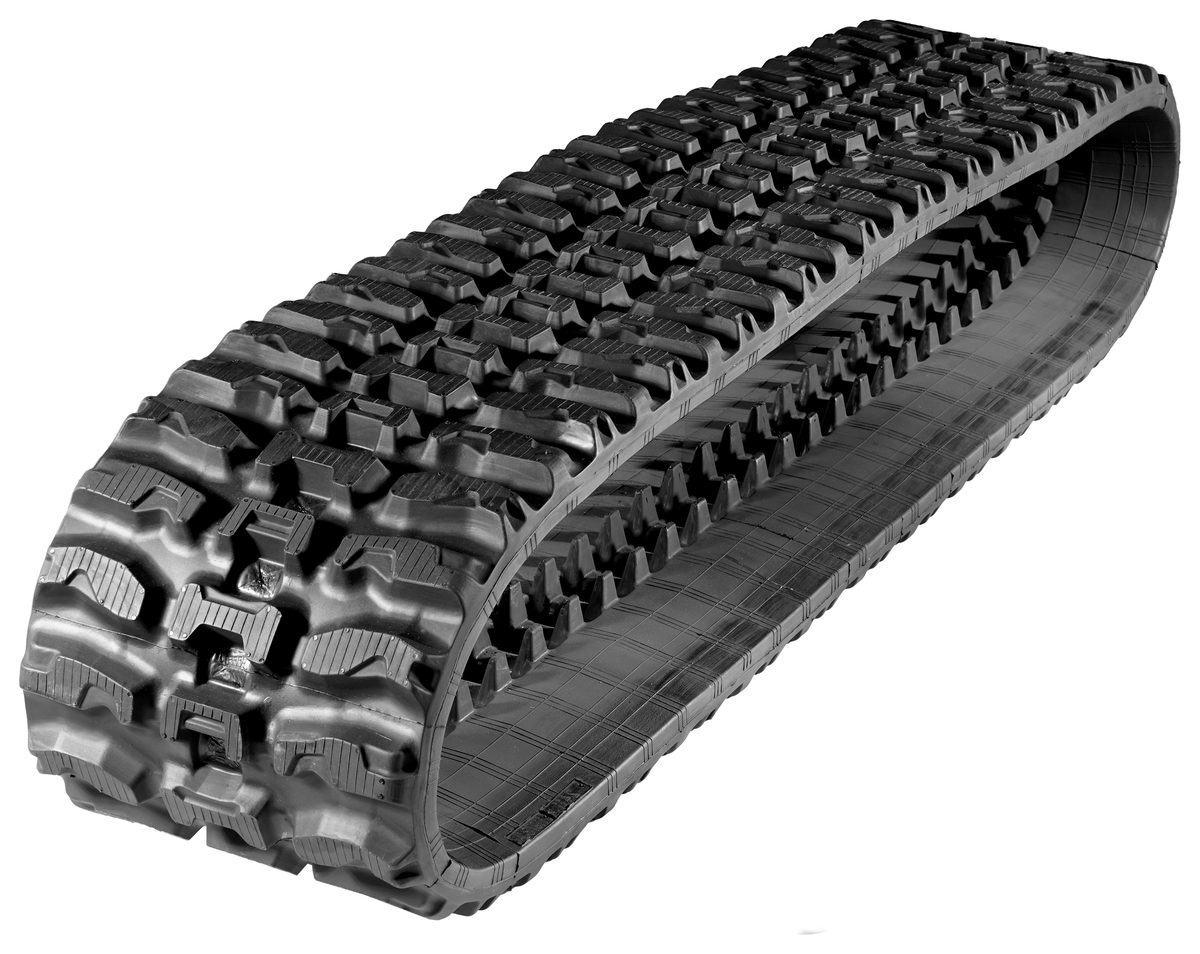
X-TRAC Q-Lug
- Profile
- Cup lug
- Snow
- 5 / 5
- Mud
- 5 / 5
- Best for
- Snow removal, mud, demolition, wet-season landscaping, forestry
The Q-Lug's biggest advantage in snow is that it stays clean. When the gaps between the lugs pack with snow, a track loses traction. The Q-Lug has wide ejection channels between its lugs, so snow and slush clear out as the track turns instead of building up.
The lugs themselves are deep and cup-shaped, so they bite into loose snow and broken frozen ground. Better grip means less track spin, and that matters in winter, because spinning on cold rubber wears it quickly. The edges and roller paths are reinforced to handle curbs and frozen windrows, and the compound is tear-resistant.
It handles mud just as well, so it stays useful well into the spring thaw.
Here's how all three X-TRAC track loader patterns compare. The Zig-Zag handles snow reasonably well at 4 out of 5. The C-Lug is better suited to dry, firm ground.
| Pattern | Snow | Mud | Dirt | Gravel |
|---|---|---|---|---|
| Q-Lug | 5 | 5 | 4 | 3 |
| Zig-Zag | 4 | 4.5 | 5 | 4 |
| C-Lug | 2 | 3 | 5 | 5 |
Ratings from the X-TRAC Track Loader Tread Pattern Guide.
If you're planning to switch, it's easier to get the sizes you need before the season's demand picks up.
Operating in the cold
Avoid spinning the tracks. It wears rubber in any season, and faster in winter when the compound is stiff and the ground is hard. Smooth throttle and steering go a long way.
Snow hides things. Rebar, rock, curbs and chunks of ice can all cut a track or damage the undercarriage, so walk an unfamiliar site before working it, and go around frozen debris where you can.
Machines take longer to stop on snow, ice and frozen hardpack, especially on a slope, so leave extra room. A tread that's good in snow won't necessarily grip on smooth ice, so set your speed for the surface you're actually on. Shorter days also mean more work in poor light. Make sure walk-arounds happen somewhere with proper lighting.
Daily checks
A few minutes at the start and end of each shift can catch damage early and stop build-up from freezing in place. If you only do one of these, make it the last one.
- Before starting, look over both tracks for cuts, cracks, missing chunks and exposed steel cord. Moisture gets into cuts and corrodes the cables.
- Remove packed snow and ice from around the sprockets, idlers and rollers. Packed ice can push a track out of alignment and cause it to come off.
- Once the undercarriage is clear, check track tension against the machine's spec. Frozen build-up makes a track run tighter than it should, which loads the cables, sprocket and idler bearings.
- Keep an eye on tread depth. If the lugs are getting low, plan a replacement now rather than in the middle of the season.
- At the end of every shift, clean mud, salt, slush and ice off the tracks and undercarriage. Whatever's left on overnight will be frozen solid by morning.
It's also worth having your dealer inspect the undercarriage and tracks before winter starts.
Parking and storage
Indoor storage is best. A heated shop stops the machine from freezing up overnight. An unheated shed or carport won't do that, but it keeps snow and freezing rain off. If the machine has to stay outside, a tarp still helps.
Park on dry, firm, level ground. Wet ground can freeze around the tracks overnight, and pulling a machine free in the morning is hard on the rubber and the drivetrain. Avoid spots where snow drifts or plowed snow will pile up.
Not sure which track to run?
Send us the make and model of each machine, the track size if you know it, and the conditions it'll be working in. We'll recommend an X-TRAC pattern and confirm availability. Dealers can also ask about stocking Q-Lugs for snow season. Reach us through the dealer portal, by email or by phone.