
Most people assume OEM-branded rubber tracks are built by the equipment manufacturer. They almost never are.
Kubota, Bobcat, Cat, Takeuchi. They build machines. Tracks are a specialized discipline, so they source from dedicated factories, and many of those same factories also supply aftermarket brands. Same cord, same compound, different stamp on the sidewall. The real question isn't OEM vs aftermarket. It's which factory built your track, and what corners were cut.
What cutting corners looks like
Failures you can see, caused by things you can't.
These are failure modes we see regularly on lower-tier tracks. Almost all of them trace back to compound quality, cord construction, or the bond between rubber and steel.
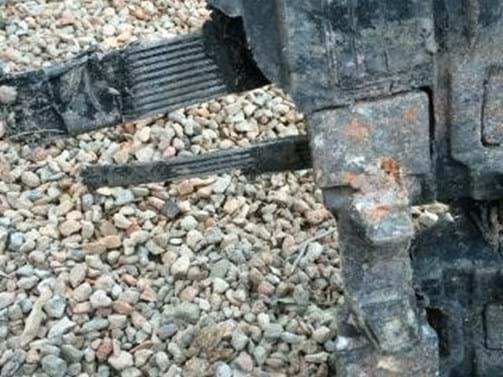
Steel cables rusting and pulling from the rubber. Caused by moisture intrusion and weak cord-to-rubber bonding.
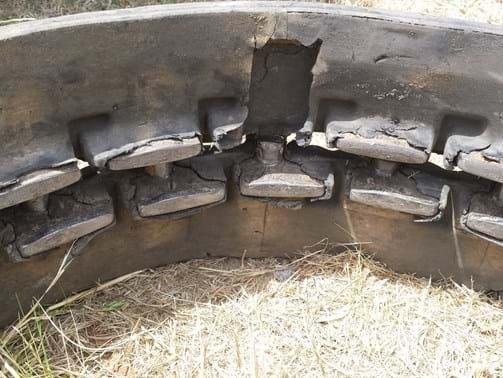
Cracks spreading through the carcass. Usually a sign of recycled rubber content or insufficient synthetic blend.
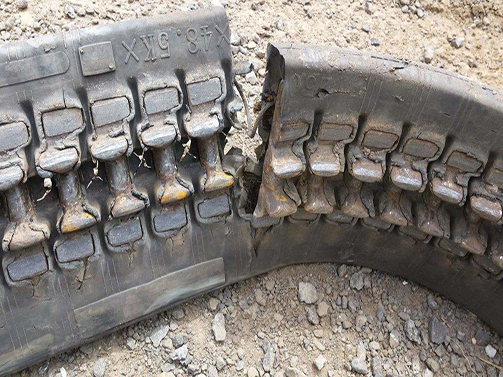
Rubber separating from the metal core. A manufacturing shortcut, typically shortened curing cycles or cheap bonding agents.
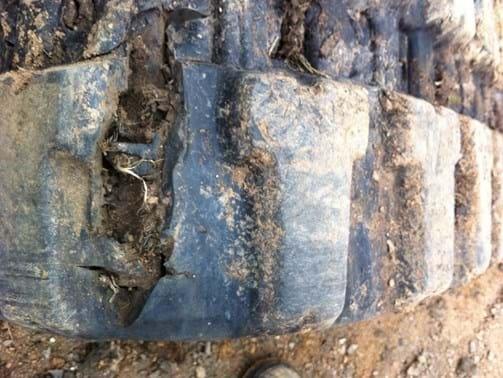
Lugs tearing from the base. Brittle rubber under load, common in tracks running below their cold-weather spec.